Can You Use an Extension Cord with Your CPAP? (Yes, With Conditions)
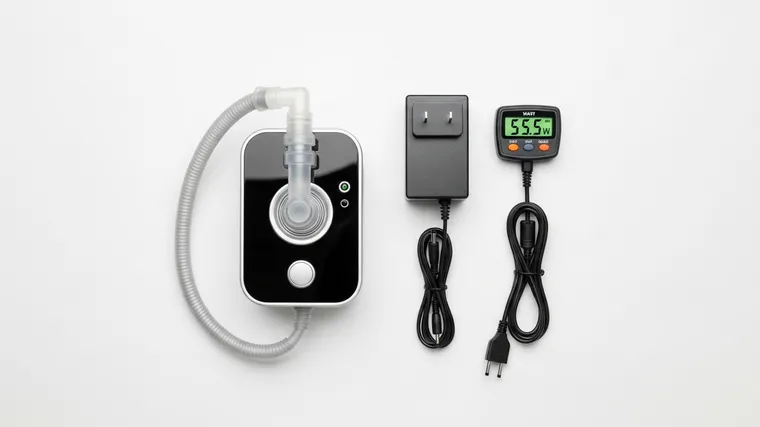
The short answer: yes, a standard extension cord works fine with a CPAP. The longer answer involves cord gauge, length, and how your CPAP handles voltage drop.
Why Extension Cords Are Usually Fine
A typical CPAP without humidifier draws 15–25W. With a heated humidifier running, it can reach 60–90W during heat-up cycles. Even at 90W peak draw, that’s less than a single incandescent light bulb on a 15-amp circuit. Standard household extension cords handle this easily.
The Variables That Matter
Cord Gauge (AWG)
Lower AWG numbers = thicker wire = less resistance. For CPAP use:
| Cord Length | Minimum AWG | Notes |
|---|---|---|
| Under 15 feet | 16 AWG | Any standard extension cord |
| 15–25 feet | 16 AWG | Still fine for CPAP power levels |
| 25–50 feet | 14 AWG | Reduce voltage drop on longer runs |
| Over 50 feet | 12 AWG | Unusual for home use |
Always Use a Grounded (3-Prong) Cord
CPAP machines have metal frames and switching power supplies. The ground connection is a safety requirement. Never use a 2-prong extension cord or a cheater adapter that eliminates the ground.
Fully Uncoil the Cord
A coiled extension cord can act like an inductor and generate heat under sustained load. For overnight use, run the cord flat along the floor or wall. This isn’t a fire risk at CPAP power levels, but it’s a good habit.
Keep It Dry
CPAP extension cords run near beds and often near humidifiers. Make sure the cord and connectors stay clear of the humidifier water tank and any condensation on the hose.
What About CPAP Errors on Extension Cords?
Some users report CPAP errors — especially “Low Pressure” or “No Flow” — when using long or thin extension cords. This is voltage drop: the CPAP’s power supply receives slightly less than 120V and reduces output.
Fix: Use a shorter cord or a heavier gauge (go to 14 AWG). If the problem persists, the cord isn’t the issue — check the power supply and the AC adapter.
Surge Protection
A CPAP’s switching power supply handles modest voltage fluctuations, but a direct lightning strike or power restoration surge can damage it. A surge protector rated at 1000+ joules is cheap insurance. Look for:
- Grounded 3-prong outlets
- 1000+ joule rating
- UL listed
Travel and International Use
If you’re traveling internationally and using a step-down transformer with your CPAP, check the CPAP’s power supply label first. Most modern CPAP power supplies are auto-ranging (100–240V) and don’t need a transformer at all — just the correct plug adapter. Running a transformer through a long extension cord in addition to the CPAP power brick is unnecessary and adds conversion losses.
The One Thing to Actually Avoid
Don’t run a CPAP through a long thin cord in the same circuit as a high-draw appliance. A space heater on a 16 AWG extension cord shared with your CPAP is both a voltage-drop risk for the CPAP and a fire risk for the cord (space heaters draw 1500W — far beyond safe cord ratings).
Frequently Asked Questions
Is it safe to use an extension cord with a CPAP machine?
Yes, with conditions. Use a grounded 3-prong extension cord rated for at least 15 amps, keep the cord under 25 feet to minimize voltage drop, and make sure it's fully uncoiled before use to prevent overheating. A 16 AWG or heavier cord is sufficient for most CPAPs.
What gauge extension cord should I use for CPAP?
For cords under 25 feet, 16 AWG is adequate — CPAP machines draw 30–90W at most, well within a 16 AWG cord's rating. For longer runs (25–50 feet), use 14 AWG. Never use indoor extension cords outdoors or in wet environments.
Can I use a surge protector with my CPAP?
Yes, and it's recommended. A surge protector rated at 1000+ joules protects the CPAP's power supply from voltage spikes. Use one with a grounded outlet. The CPAP's own switching power supply handles minor fluctuations, but a surge protector adds meaningful protection.
Why won't my CPAP work on an extension cord?
The most common cause is voltage drop on a long or thin cord, which can cause the CPAP to drop out or reduce pressure. Try a shorter cord or a heavier gauge (14 AWG). If your CPAP has a 'Low Power' error, this is the usual culprit.
Can I use a CPAP with a power strip?
Yes, a power strip is fine as long as it's grounded and not overloaded. Avoid sharing the strip with high-draw appliances like space heaters. A surge-protected power strip is better than a bare strip.